Per maggiori informazioni, chiamare il numero o compilare il modulo di contatto.
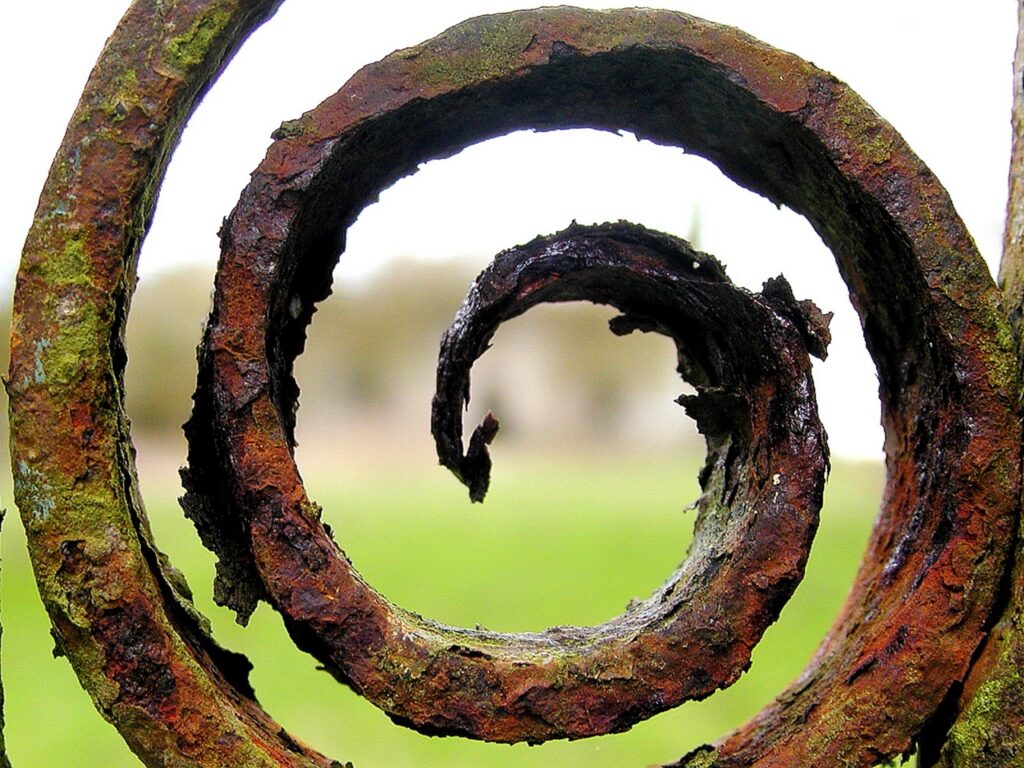
Hello to everyone! I am Pasquale Semeraro and today I want to talk about a very common phenomenon, that is very know by everybody, that is the rust.
I don’t want to bore you with the details, the formation of the rust and the corrosive process. If we want to study in depth this subject, we can read on any site about the electrochemical process leading to the formation of the rust.
In simple terms, we say that the corrosion is a very common phenomenon, which regards metals in general.
The iron is one of the most affected metals by the phenomenon of corrosion, especially in the presence of water or moisture and oxygen.
Most probably if you have a railing around your balcony, from time to time, you will meet with this problem.
Unfortunately, if it isn’t immediately stopped, this chemical reaction will lead to the total disintegration of our support because the rust is a porous and friable material that tends to break away the surface itself.
In addition to the iron, there are other materials that can be attached to this phenomenon, that is steel and cast iron.
The materials such as aluminum, chromium, nickel and tin act in a different way because, thank to the passivation process, they can resist to the atmospheric corrosion.
Being a producer of paints, daily I explain to my customers how and what to do to stop this phenomenon. But, as a matter of fact, we have created a decorative product for the interior with a rust effect that is very popular lately. While inside it is a decorative that decorates and doesn’t damage the support, the real rust is a proper problem that can cause big damages. Yes, I know this! It is a strange situation!
In order to protect ferrous materials, we usually cover them with a protective layer, that can be made of a paint containing antioxidant agents. Or one of the most common and successful method is the zinc – coating of the ferrous support; in this way, the iron is isolated from the air and the moisture and then it can’t oxidize.
The zinc – coating is made by qualified businesses; it covers our ferrous support with a layer of zinc. The galvanization can be a hot process, that is wetting our ferrous surface with molten zinc, with spray, electrolytic, or a cold process, ie protecting our support with zinc – based paints.
I am not updated and I don’t know exactly the costs of this treatment, but I suppose that they are higher than those of the traditional painting of the support.
The painting is the easier application cycle in order to protect the ferrous support from the attack of the rust; it is carried out with the application of an anti – rust primer and an anti – rust paint.
Before applying a paint, I always recommend to remove completely grease from the support with a cloth soaked of diluent; if there are the formations of the rust, it is necessary to brush and remove them. This allows to prevent that the rust takes shape in the future.
More the cleaning of the support is made in an important way, we will have so much less chance to have the problem “rust”.
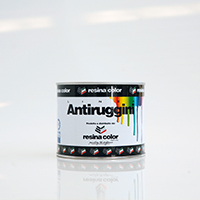 After this, you can apply an anti – rust product based on red lead (only for professional men and in areas where it is specifically requested) or based on zinc phosphorus, mono or two – components.
Both are very effective against corrosion, then we can apply at least two coats of final paint.
Sometimes it can happen that there are equally phenomena of rust under the layer of the paint, bringing the peeling of the same.
 There is another method to block the rust, that is the application of a rust converter that, applied to the support, reacts forming a transparent protective film that blocks it and prevents further formations.
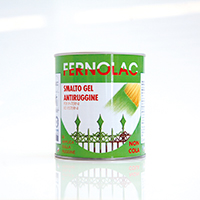 With increasingly growing requests, producers have also developed pigmented (coloured) paints with the converter within.
This kind of paint can be applied with a brush or with a spray also with one coat, thus allowing the user to intervene in a faster way. It also allows to save time and money.
An important feature of this kind of paints is that they are generally gelatinous and they don’t strain.
Personally, when the customer chooses to buy this kind of product by my business, before applying it, I always recommend to make a good cleaning of the support. If the phenomenon is really widespread, but he prefers this paint for lack of time or for the request of simplicity in application, it is necessary to apply also a coat of a good anti – rust product.
Bye! See you in the next article!
P.S.: If you think this article is useful, you share it with your friends